Product details description
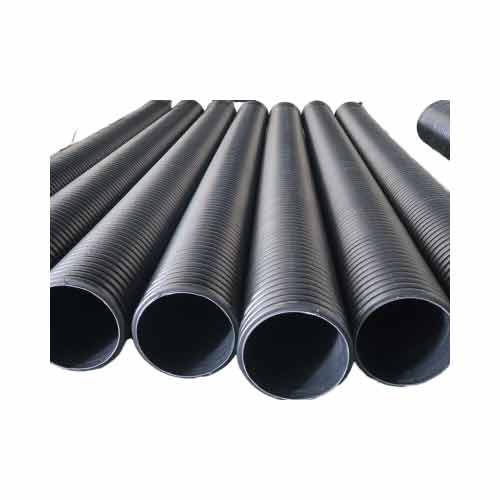
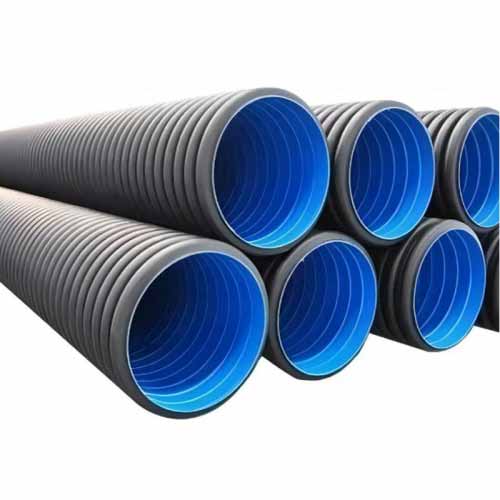
Corrugated pipes made from HDPE (high-density polyethylene) and PVC
(polyvinyl chloride) are widely used in drainage, culverts, and underground
utilities, but their suitability varies with environmental and mechanical
demands. Understanding their differences in chemical resistance and structural
performance is essential for selecting the right material for long-term
reliability.
Chemically, HDPE exhibits exceptional resistance to a broad spectrum of
substances, including acids, alkalis, salts, and many organic solvents. Its
non-polar molecular structure lacks reactive sites, making it inert even in
aggressive wastewater or chemical effluent. PVC, while also resistant to many
chemicals, is more susceptible to degradation from aromatic hydrocarbons,
ketones, and certain chlorinated compounds, especially at elevated temperatures.
This makes HDPE the preferred choice for industrial discharge and agricultural
runoff applications.
Structurally, both materials leverage corrugation to enhance
stiffness-to-weight ratios. HDPE’s flexibility allows it to withstand ground
movement and differential settlement without cracking, making it ideal for
seismic zones and areas with unstable soils. PVC is stiffer and more brittle,
offering higher initial hoop strength but less tolerance for deflection. Under
high external loads, HDPE pipes can deform elastically and recover, whereas PVC
may fracture if overstressed.
Temperature performance further differentiates them. HDPE retains toughness
down to approximately –40°C and maintains strength up to 60°C, providing
reliable service in cold climates and moderately heated environments. PVC
becomes brittle below 0°C and may soften above 60°C, limiting its use in
freeze-thaw cycles or high-temperature fluid transport.
Joint integrity is critical for buried systems. HDPE pipes are typically
joined by heat fusion (butt or socket welding), creating monolithic, leak-free
connections impervious to infiltration and exfiltration. PVC joints rely on
solvent cement or rubber gaskets; while effective, these can deteriorate over
time, especially in chemically aggressive soils, leading to potential
leakage.
In summary, HDPE corrugated pipe excels in chemical resistance,
flexibility, and joint reliability, making it suitable for harsh environments
and dynamic loading conditions. PVC offers higher initial stiffness and
dimensional stability where chemical exposure is limited and soil conditions are
predictable. Matching pipe material to site-specific factors ensures optimal
performance, longevity, and reduced maintenance costs.
Previous article:
Corrugated Pipe Materials Explained: PVC, HDPE, and Metal Options Compared
Next article:
Corrugated Pipe Fittings and Accessories: Connectors, End Caps, and Adaptation Hardware