Product details description
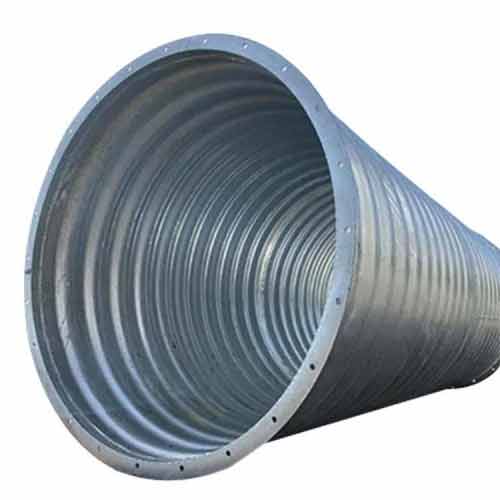
The engineering of corrugated pipe structures represents a fascinating
intersection of material science and structural mechanics, where the simple act
of introducing wave-like patterns dramatically transforms the mechanical
properties of cylindrical forms. Corrugated pipes have become indispensable
components in modern infrastructure, serving applications ranging from
stormwater management systems and agricultural drainage to oil and gas
transmission networks. The fundamental principle underlying corrugated pipe
design lies in the geometric transformation of a flat sheet into a series of
alternating crests and troughs, which effectively increases the section modulus
without proportionally increasing material usage. This efficiency has made
corrugated pipes economically attractive while simultaneously providing enhanced
resistance to external loads, temperature-induced expansion and contraction, and
ground movement stresses that would compromise rigid pipe alternatives.
The structural analysis of corrugation patterns requires comprehensive
understanding of how geometric parameters influence stress distribution and
load-bearing capacity. Engineers must consider multiple variables including
corrugation depth, wavelength, wall thickness, material yield strength, and the
angle of the corrugation profile relative to the pipe axis. Deep wave patterns
with shorter wavelengths generally provide greater resistance to diametral
deformation but may reduce flow capacity and increase manufacturing complexity.
The transition zones between crest and trough represent areas of stress
concentration where fatigue cracking may initiate under cyclic loading
conditions, making these regions critical points for quality control during
manufacturing and installation. Advanced finite element analysis software has
revolutionized the design process, enabling engineers to simulate stress
distributions under various load scenarios and optimize corrugation geometries
for specific application requirements before physical prototype
construction.
Load distribution in corrugated pipe systems follows complex
three-dimensional stress patterns that differ substantially from those observed
in smooth-walled pipes. External soil pressures create both circumferential hoop
stresses and longitudinal bending moments that vary along the pipe circumference
according to the corrugation geometry. The corrugated profile effectively
channels external loads into the structure's folds, creating a mechanism where
the wave pattern acts as a series of tiny arches distributing concentrated
stresses across wider areas. This arching effect is particularly beneficial in
buried applications where soil-structure interaction determines long-term
performance. Internal pressures from fluid flow generate different stress
distributions, with hoop stresses concentrated in the crest regions while the
trough areas experience lower stress levels, creating an efficient load path
that maximizes the utilization of available material strength.
The ongoing development of corrugated pipe technology continues to push the
boundaries of performance and application scope through material innovations and
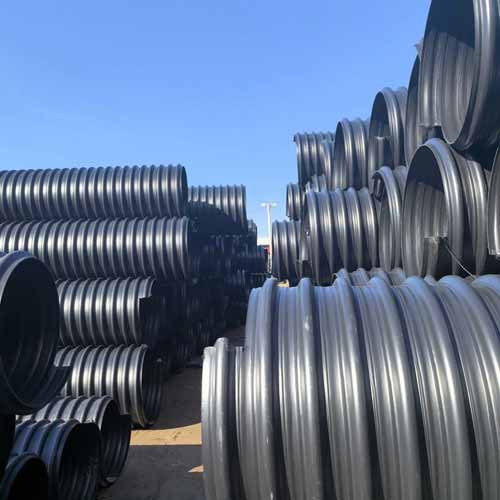
optimized corrugation profiles. High-density polyethylene and polypropylene
corrugation pipes have gained significant market share in drainage applications
due to their corrosion resistance, lightweight handling characteristics, and
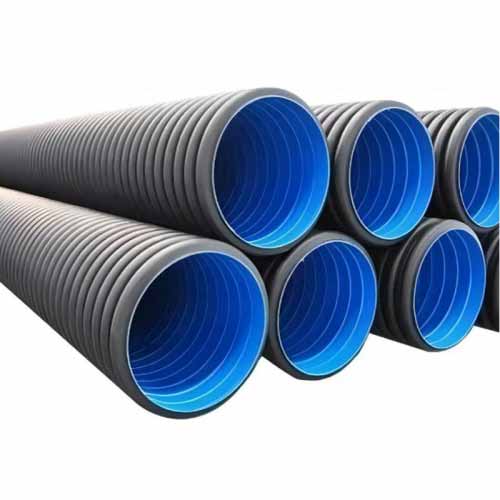
excellent jointing systems that maintain system integrity. Dual-wall and
triple-wall corrugated pipe configurations combine the structural advantages of
external corrugation with smooth internal surfaces that reduce flow friction and
prevent sediment accumulation. Research into bio-inspired corrugation patterns
that mimic natural structures like bamboo or seashells shows promise for
developing next-generation pipes with superior strength-to-weight ratios. As
infrastructure demands evolve with climate change adaptation needs and
population growth pressures, corrugated pipe systems will remain essential
components of resilient, efficient water management and fluid transmission
infrastructure worldwide.
Previous article:
Corrugated Pipes in Landscaping: Managing Water Flow Without Erosion
Next article:
Corrugated Electrical Conduit - Crush-Resistant & Waterproof