Product details description
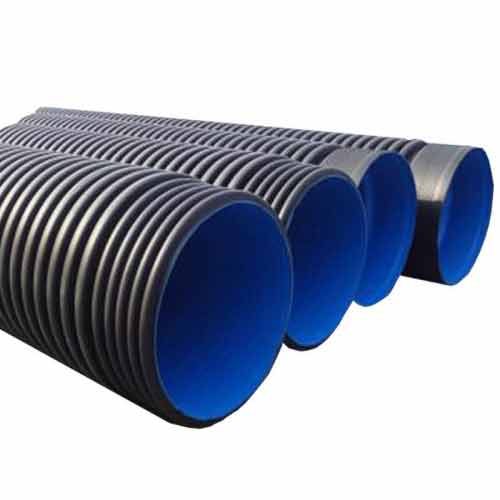
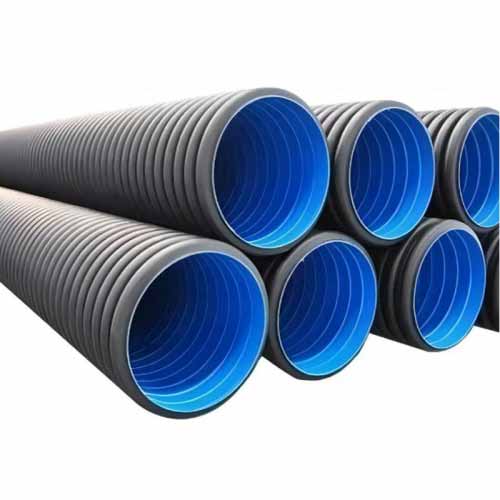
Corrugated pipes have become a preferred solution for underground
applications—from drainage and sewer systems to culverts and utility
conduits—largely because of their remarkable ability to resist cracking under
pressure. Their unique structure features a series of ridges and grooves running
helically or longitudinally along the pipe wall. This corrugation increases the
pipe's flexibility, allowing it to absorb ground movement, settlement, and
vibrations without fracturing. Unlike rigid pipes, which transmit stress
directly to joints and are prone to breakage, corrugated pipes flex and adapt,
dispersing pressure evenly across the structure.
Material selection plays a vital role in pressure resistance. High-density
polyethylene (HDPE) and polypropylene are commonly used for underground
corrugated pipes due to their excellent strength-to-weight ratio, chemical
resistance, and durability. These thermoplastics can withstand both internal
hydrostatic pressure from fluid flow and external loads from soil weight and
traffic. HDPE, in particular, exhibits high impact resistance even at low
temperatures, preventing cracks caused by sudden loads or shifting earth. Some
manufacturers also incorporate additives to enhance UV stability and slow
oxidative degradation for above-ground exposure during installation.
The design of corrugated pipes inherently accommodates dynamic stress. The
alternating peaks and valleys of the corrugation act like a spring, compressing
and expanding with load changes. This flexibility means that differential
settlement—where one part of the pipe settles more than another—does not induce
point stresses high enough to initiate cracks. Moreover, joints in many
corrugated systems are designed to be bell-and-spigot or snap-fit, allowing
slight angular deflection while maintaining a watertight seal. This capability
is critical in seismic zones or areas with expansive soils, where rigid pipe
would likely fail.
Installation practices further enhance crack resistance. Backfilling with
graded, compacted material prevents voids that could lead to concentrated loads,
and proper bedding supports the pipe’s shape to avoid deformation. Avoiding
point loads from heavy machinery during and after installation preserves
structural integrity. Thanks to their flexibility, material toughness, and smart
joint design, corrugated pipes provide a long-lasting, crack-resistant pathway
for underground infrastructure, even in challenging geotechnical conditions.
Previous article:
Corrugated Metal Pipes for Culverts and Sewers
Next article:
How Corrugated Pipes Prevent Clogging: Design Features That Keep Flow Smooth