Pressure-Resistant Municipal Sewer Corrugated Pipe for Deep Buried Sewer Lines
Release time:2026-03-01 Click:15
Municipal sewer systems form the critical infrastructure backbone of modern urban environments, responsible for transporting wastewater and stormwater away from populated areas to treatment facilities. Among the various pipe materials available for this essential application, corrugated pipes have emerged as a highly effective solution, particularly for deep buried sewer lines that must withstand substantial external pressures and challenging installation conditions. These specialized pipes combine structural integrity with practical installation advantages, making them increasingly popular among municipal engineers and construction contractors worldwide.
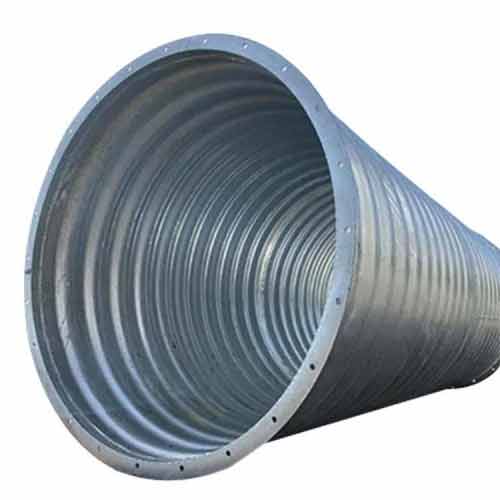
The pressure-resistant municipal sewer corrugated pipe features a unique double-wall or triple-wall structural design that provides exceptional load-bearing capacity. The corrugated exterior surface creates a series of concentric rings that distribute external soil pressures evenly along the pipe's length, preventing localized stress points that could lead to deformation or failure. This engineering approach allows the pipe to support significant burial depths, sometimes exceeding fifteen meters, while maintaining its original cross-sectional shape and flow capacity. The smooth interior wall, meanwhile, ensures minimal friction losses and prevents the accumulation of debris that could cause blockages over time.
Material selection plays a fundamental role in determining the performance characteristics of these sewer pipes. High-density polyethylene, commonly abbreviated as HDPE, has become the material of choice for modern municipal applications due to its excellent chemical resistance, flexibility, and longevity. HDPE demonstrates remarkable resistance to corrosion from acidic or alkaline wastewater, eliminating the degradation issues that plague traditional metal pipes. The material also maintains its mechanical properties across a wide temperature range, from freezing winter conditions to summer heat waves, ensuring consistent performance throughout the year.
Installation efficiency represents another significant advantage of corrugated sewer pipes compared to traditional alternatives. The pipe's inherent flexibility allows it to accommodate minor ground movements without cracking or joint separation, a critical feature in areas prone to soil settling or seismic activity. Lightweight construction reduces the need for heavy lifting equipment, lowering installation costs and accelerating project timelines. Additionally, the pipe can be supplied in long continuous lengths, minimizing the number of joints that require sealing and reducing potential leakage points in the system.
The longevity of pressure-resistant municipal sewer corrugated pipes justifies their initial investment cost over the lifecycle of a typical sewer project. Manufacturers typically provide service life estimates exceeding fifty years under normal operating conditions, with some installations demonstrating successful performance for decades beyond initial projections. This extended lifespan reduces the frequency of replacement cycles, resulting in lower long-term maintenance costs and reduced disruption to urban areas that would otherwise require frequent excavation work.
Quality assurance and testing protocols ensure that municipal sewer corrugated pipes meet stringent industry standards before deployment. Manufacturers conduct rigorous hydraulic testing to verify flow capacity, crush resistance testing to confirm load-bearing capabilities, and chemical resistance testing to validate material durability. Third-party certification programs provide additional verification, giving municipal authorities confidence in the products they specify for critical infrastructure projects.
Environmental considerations increasingly influence material selection for municipal infrastructure projects. HDPE corrugated pipes are fully recyclable at the end of their service life, supporting circular economy principles and reducing the environmental footprint of sewer construction projects. The manufacturing process itself has become more energy-efficient over time, with recycled feedstocks increasingly incorporated into production operations. These sustainability credentials align with the environmental goals of many municipalities seeking to reduce their carbon footprint while maintaining robust infrastructure systems.
Previous article:The Role of Corrugated Pipe PVC in Infrastructure
Next article:The Versatile Legacy of Plastic Pipe
Hot products
Mobile: +86 15369229308
Email:metalproducts2025@163.com
Email:565169797@qq.com